
Go Solar Yourself: The Ultimate DIY Installation Handbook
- integrations960
- Dec 10, 2025
- 9 min read
Why Complete Solar Installation Starts with Understanding the Basics
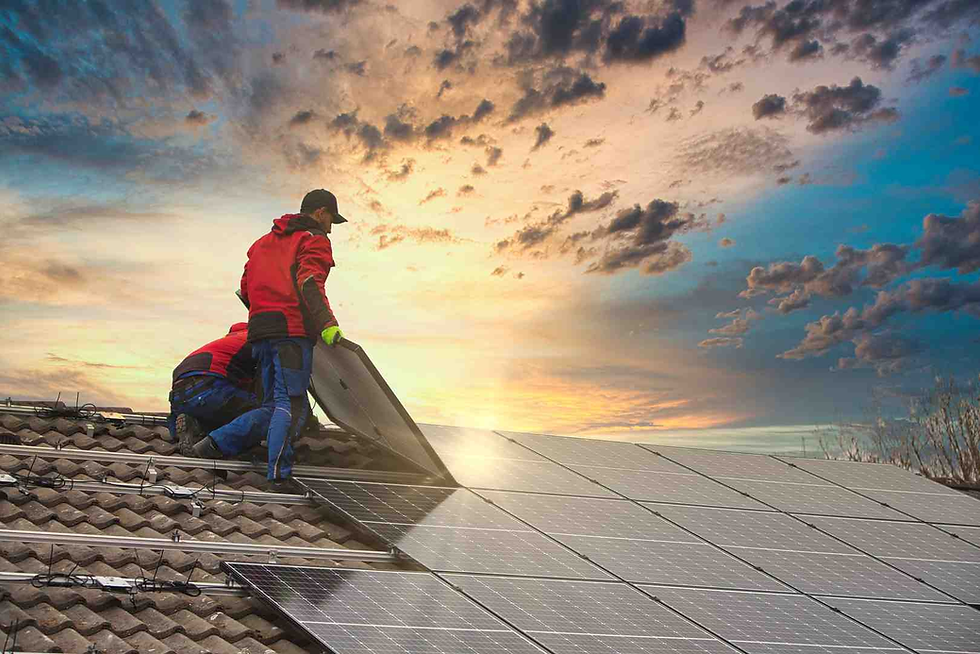
A complete solar installation is the entire process of designing, mounting, and connecting a solar power system to your home. The key steps involve planning, mounting hardware, electrical work, and final activation. You'll choose from three main system types: grid-tied (connected to the utility), off-grid (independent with batteries), or hybrid (a combination of both).
Going solar yourself can save thousands in labor costs, with DIY installations often reducing expenses by $10,000 or more. It's a chance to take control of your energy future. However, the project demands careful planning, electrical knowledge, and strict adherence to safety codes. You'll be working at heights with high-voltage systems and navigating local permits. A single mistake can reduce efficiency or create safety hazards.
I'm Stanford Johnsen, Founder of Capital Energy, and I've guided thousands of homeowners through the complete solar installation process. Whether you go DIY or seek expert support, understanding each step is key to maximizing your investment and achieving energy independence.

Planning Your DIY Solar Project
Solid planning is the foundation of any complete solar installation. Rushing this stage can lead to an undersized system or permit rejections. A few hours of planning now will save you weeks of headaches.

Start with an energy consumption audit. Review your electricity bills from the past year to find your average monthly kilowatt-hour (kWh) usage. This data is crucial for sizing your system correctly.
Next, choose your system type. Grid-tied systems connect to your utility, letting you bank excess power via net metering. Off-grid systems offer complete independence but require significant battery storage. Hybrid systems provide a grid connection plus battery backup for outages.
Then, assess your property. Solar panel orientation is critical; in the Southwest, south-facing panels are ideal. A roof pitch between 5/12 and 18/12 (23° to 56°) is optimal. Also, perform a shading analysis at different times of the day. Trees, chimneys, or neighboring buildings can cast shadows that reduce your system's output.
Finally, tackle the paperwork. Local permits are legal requirements that ensure your system is safe and structurally sound. Cities across Arizona, California, Nevada, and Texas have specific codes, so research your local requirements early, as the approval process can take weeks.
Choosing Components for a Complete Solar Installation
Choosing compatible components is essential for a complete solar installation.
Solar panels are your system's workhorses. For the Southwest, select durable, weatherproof panels. Monocrystalline panels are popular for their high efficiency and sleek appearance. Our solar panels with strong weatherproofing are designed for harsh climates.
Inverters convert DC electricity from your panels to AC for your home. String inverters are a cost-effective central unit, while microinverters attach to each panel for individual optimization, boosting production if some panels are shaded.
Racking and mounts secure the panels. Roof options include low-profile flush mounts or adjustable tilted mounts. If your roof is unsuitable, ground or pole mounts are excellent alternatives.
Solar batteries store energy for off-grid or hybrid systems. Lithium-ion batteries are the standard, available in various configurations from brands like Tesla Powerwall, Sol-Ark, and Enphase Storage.
Charge controllers regulate power flow to your batteries, preventing overcharging and extending their life.
Wiring and connectors complete the circuit. Use specialized, UV-resistant solar PV cables with MC4 connectors and protect wire runs with electrical metallic tubing (EMT).
Sizing Your System and Estimating Costs
Proper system sizing is crucial. Start with your annual kWh usage and decide what percentage of your bill you want to offset.
In the Southwest, every kilowatt (kW) of solar capacity generates roughly 1,200 kWh per year. If you use 12,000 kWh annually and want 100% coverage, you'd need a 10 kW system (12,000 ÷ 1,200 = 10).
Professional complete solar installation costs about $2.50 to $3.50 per watt. A 10 kW system could run $25,000 to $35,000. With DIY, you can lower material costs to $1.50 to $2.50 per watt, potentially saving $10,000 or more on that same system.
Don't forget financial incentives. The federal Investment Tax Credit (ITC) can significantly reduce your costs. Many utilities in Arizona, California, Nevada, and Texas also offer rebates. Research local programs to maximize your savings.
Step-by-Step Guide to Your Complete Solar Installation
Now for the installation. But first, let's cover the most critical aspect: safety.

Safety is non-negotiable. You'll be working at heights with heavy equipment and high-voltage electricity.
Fall Protection: Use a personal fall arrest system (harness, roof anchors) for any work 6 feet or higher.
Electrical Safety: Treat every wire as live. Wear rubber gloves, use insulated tools, and turn off the main power before making connections. Use a multimeter to verify circuits are dead.
Lifting: Solar panels are heavy. Use proper lifting techniques and always have a helper.
Digging: For ground mounts, call 811 before you dig to locate buried utility lines.
Conditions: Work only in dry weather and keep your area organized to prevent trips.
You'll need drills, a torque wrench, a multimeter, wire cutters, a chalk line, and a caulking gun. A rafter finder like the Bosch D-Tect 150 can be invaluable. Be realistic about your timeline; a DIY complete solar installation can take several weekends.
Step 1: Mounting the Racking and Rails
This step creates the skeleton for your solar array.
For roof mounts, you must locate and secure racking directly to the rafters. Use a stud finder or other methods to find them, then mark their centers. Install roof attachments (flashings, clamps, or hooks) into the rafters, sealing every penetration with high-quality roofing sealant to prevent leaks. Bolt the aluminum racking rails to the attachments, ensuring proper alignment and torque.
For ground mounts, you'll dig anchor holes and pour concrete piers according to an engineering plan. Once the foundation cures, attach the racking rails to the support structure.
For more detailed guidance on this crucial step, check out this Helpful guide from Capital Energy's installation resources.
Step 2: Installing Panels and Electrical Wiring
With the racking in place, it's time to install the panels and wiring.
Always handle panels with a helper. Position each panel on the rails and secure it with mid-clamps and end-clamps, tightening them to the manufacturer's specified torque (often around 80 in-lbs).
Your system design dictates the wiring. Panels can be wired in series (positive to negative) to increase voltage or in parallel (positive to positive) to increase current. If using microinverters, they attach to the panel frame, and the panel wires plug directly into them. For string inverters, panel strings connect to a combiner box or directly to the inverter.
Proper wire management is key. Use wire clips to secure cables to the racking, ensuring they do not touch the roof surface. Protect wires from sharp edges and use conduits where necessary. Finally, grounding is a critical safety requirement. All metal components, from panel frames to racking, must be properly grounded using grounding lugs and wire.
To see these steps in action, Watch this detailed solar panel installation video from Capital Energy's resources.
Step 3: Connecting the Inverter and Battery
This step integrates your system into a functioning power source.
Mount your inverter in a cool, well-ventilated area near your main electrical panel, following the manufacturer's clearance guidelines.
For microinverter systems, the AC trunk cable connects to a dedicated breaker in your main panel. For string inverters, you'll connect the DC wires from your panels to the inverter, which then sends AC power to your main panel.
If you're including battery storage, connect the battery bank to your inverter using heavy-gauge DC cabling. Ensure all connections are torqued to spec to prevent hazards like arcing or fire. Batteries perform best around 77°F, so plan for proper ventilation and temperature control, as high heat can drastically shorten their lifespan.
The final connection runs from the inverter's AC output to a dedicated backfeed breaker in your home's main panel.
For grid-tied systems, understand net metering. This program allows you to send excess power to the grid for credits, which offset the cost of power you draw at night. Policies vary by utility, so review your local agreement.
Final Steps and Common Pitfalls
You're almost there. The final stages ensure your system is safe, compliant, and ready to generate power.
System commissioning is your final check. Before the official inspection, walk through your system. Are all connections tight? Is wiring secure? Catching faults now saves time later.
The final inspection process is where your local building and electrical inspectors approve your complete solar installation. They will scrutinize structural integrity, wiring, grounding, and code compliance. Be prepared to make adjustments if needed; it's all about ensuring a safe, long-lasting system.
After passing inspections, you need utility approval for grid-tied systems. Your utility will verify the installation and may install a new net meter. Do not energize your system until you receive explicit authorization from your utility. Doing so can create serious safety and legal issues. Once you get the green light, it's time to celebrate.
Common Mistakes to Avoid in a Complete Solar Installation
Avoid these common pitfalls to ensure a successful project.
Incorrect System Sizing: Under-sizing leads to disappointing savings, while over-sizing wastes money. Calculate your energy needs carefully.
Skipping a Component Checklist: Create a comprehensive list of all parts to avoid multiple trips to the hardware store.
Overspending on Equipment: You don't always need the most expensive option. Match components to your actual needs.
Improper Wiring: Faulty electrical work is a fire and shock hazard. If you're not confident, hire a licensed electrician.
Ignoring Local Codes: Research and follow all local building, electrical, and fire safety codes to avoid failed inspections and costly rework.
Poor Panel Placement: A system in a shaded or poorly oriented location will underperform. Your initial shading and orientation analysis is critical.
When to Call a Professional
While DIY is rewarding, some situations call for professional help.
Complex Roof Structures: If your roof has multiple angles, dormers, or obstructions, an experienced installer can design a safe and efficient array.
Advanced Electrical Work: High-voltage DC systems and main service panel integration are best left to licensed electricians if you lack extensive experience.
Navigating Permits and Utilities: Professionals have streamlined processes and relationships with local authorities, saving you time and frustration with paperwork.
The Value of Certified Installers: At Capital Energy, our 10+ years of experience in the Southwest mean we've solved every imaginable installation challenge. Our certifications guarantee your system is installed correctly, efficiently, and safely.
There's also the peace of mind that comes with professional installation, warranties, and long-term support.
Read our customer reviews to see how professional installation has transformed homes across Arizona, California, Nevada, and Texas.
Frequently Asked Questions about DIY Solar
You've made it this far, which means you're seriously considering a complete solar installation. Let's tackle some common questions that might still be on your mind.
What are the 'Solar Ready' guidelines for new homes?
"Solar Ready" guidelines are design choices made during new home construction to simplify future solar installation. This typically includes designating an unobstructed, sun-facing roof space, pre-installing conduits for wiring from the roof to the electrical panel, and allocating space in the mechanical room for inverters and batteries. These preparations can save homeowners around $1,000 on a future installation and provide enough roof space for a 1.4 to 1.9 kW system.
How do weather conditions affect solar panel efficiency?
Modern panels are resilient, but weather does have an impact.
Temperature: Surprisingly, solar panels are more efficient in cool, sunny weather than in extreme heat.
Cloud Cover: Clouds reduce output, but panels still generate power from diffuse light.
Snow: A layer of snow will halt production until it melts or is cleared. However, light snow on the ground can reflect more sunlight onto cleared panels.
Dust and Dirt: In the Southwest, dust and pollen can accumulate and reduce efficiency. Regular cleaning, often just a rinse with a hose, will maintain performance.
What are the potential savings on electricity bills with a solar installation?
Your savings depend on your system size, local electricity rates, and sunlight exposure. A larger system offsetting more of your usage will deliver greater savings. In the sunny Southwest, where electricity rates are rising, solar is increasingly attractive. Net metering policies also boost savings by crediting you for excess energy sent to the grid.
For example, a typical 4.8 kW complete solar installation in our region can generate about 5,760 kWh annually. For a household using 10,000-12,000 kWh per year, this could offset 50% or more of electricity use, saving $800 to $1,500 or more annually. Over the system's 25-year lifespan, many homeowners see a return on investment in 7 to 10 years, with the remaining years representing pure savings.
Conclusion
You now have a roadmap for a complete solar installation. Tackling this project yourself can save you thousands and give you the satisfaction of generating your own clean energy. Energy independence is the freedom to power your life with the sun.
However, the process is complex. Navigating permits, working safely at heights, and managing high-voltage electricity can be overwhelming. A single mistake can compromise safety and performance.
This is where professional expertise provides value. At Capital Energy, we've spent over a decade perfecting solar installation in Arizona, California, Nevada, and Texas. Our vertically integrated approach means we handle everything—design, permitting, installation, and support—under one roof. You get a seamless process without juggling contractors or worrying about inspections.
The choice between DIY and professional installation depends on your skills, time, and comfort with risk. If you're ready for the challenge, this guide will help. If you prefer the peace of mind that comes with certified experts, we're here for you. Either way, you're making a powerful choice for your wallet and the environment.
Ready to explore what professional solar installation can do for you? Get your free solar quote today!


Comments